Advocating for Municipalities and Communities
in Rural
Upstate New York
Upstate New York Towns Association promotes the specific needs of municipalities in rural upstate New York and addresses problems specific to the region. From affordable BROADBAND access, to Critical EMS legislation, to Farm Bills, to Infected Blacklegged ticks and Lyme disease, we work towards supporting rural NYS and safeguarding the freedoms in our upstate communities.


Broadband Advocacy
We champion affordable and reliable broadband access for rural communities in upstate New York, bridging the digital divide for a connected future. Securing reliable broadband for all New Yorkers.

Healthcare Initiatives
Our efforts extend to advocating for the state to make a greater effort to inform its citizens about the danger of ticks and tick-borne illnesses. Ticks here in New York can be infected with viruses, bacteria, or parasites. Their bites pass on pathogens leading to the most common tick-borne illness, Lyme Disease and life threatening diseases like Anaplasmosis and spotted fever. UNYTA has visited Albany to lobby for ways to get more people informed about the dangers of tick bites.
Freedom Preservation
Guarding the freedoms of upstate communities, we work to protect the rights and interests of residents, with a goal of ensuring NYS citizens keep their freedoms.
About Upstate New York Towns Association
Empowering Upstate Communities
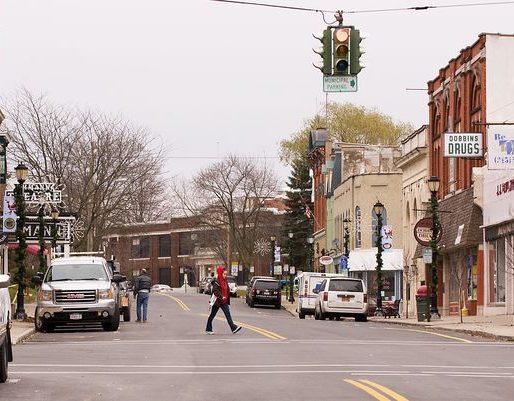
At Upstate New York Towns Association, we are dedicated to advocating for the unique needs of rural municipalities in upstate New York. Our focus ranges from addressing broadband accessibility to tackling healthcare challenges like Lyme disease. Join us in protecting the freedoms and wellbeing of upstate towns.


Serving the
Unique Needs and Interests
of Upstate
New York Towns
Editor's note: Upstate New York Towns Association (UNYTA) has been at the forefront of the push for easily accessible and affordable broadband for all NYS residents.
RURAL BROADBAND
Identifying current broadband needs in rural New York State
Joint Senate and Assembly Public Hearing
Tuesday, September 17, 2019
11:00 a.m.
Hearing Room A
Legislative Office Building, 2nd Floor, Albany, NY 12247
My name is Carolyn Price, and I am speaking today as President of the Upstate New York Towns Association, www.upstatenyta.org and Supervisor of the Town of Windsor, Broome County. I am also speaking for people who make huge sacrifices because they have no internet access such as driving a 40-mile roundtrip to do banking.
My remarks will focus on recommendations to identify and reach the unserved and underserved with broadband in rural areas of New York State.
New York State broadband is delivered via wireline technologies and wireless technologies. However, we don’t know how much broadband coverage we truly have, particularly in rural areas. To continue to more forward and have access for the unserved and underserved, we need to know what we have, where it is, and options to reach the unserved and underserved areas.
Why don’t we know what we have and where it is? The maps are faulty because the FCC allows internet providers to claim on Form 47 an area as served if only one home in a census block has internet service.
Recommended #1: Work with FCC to get a better reporting requirement so there are more accurate maps.
Fiber is the optimal broadband technology. There is fiber in parts of rural communities. Do we really know where fiber is and where it doesn’t exist? Through utility pole data surveys, we could get answers. These surveys entail getting the GPS location of each pole, identifying the pole numbers, finding out who owns the poles, and determining what is actually on the poles. These utility pole data surveys help to develop efficient fiber route design by minimizing the number of poles that need to be attached to and provide the details on the amount of miles of fiber that need to be build to complete a network.
Recommendation #2: Fund Utility Pole Data Surveys
Municipalities have not been involved in the application process for funding through New York State’s Broadband program Office. We find out what projects have been awarded funding when those announcements are made publicly. Sometimes the funded locations make sense and other times high-need areas are overlooked.
Recommendation #3: Require companies applying for State funding to describe how municipalities were involved in the application process and require sign-off in the application by the chief municipal officer.
The New York State Broadband Program office is located in New York City. The Upstate New York Towns Association had a speaker from that office, and it was a most informative meeting. The speaker was from the New York City area and was surprised to learn how bad the lack of broadband and the underserved is in rural Upstate towns. Remember the Upstate rural resident driving a 40-mile roundtrip to do banking? Would that happen in New York City?
Recommendation #4: Move the Broadband Program Office from New York City or establish a satellite office in an Upstate town or village so the people doing this work are close to the communities with the largest broadband needs. Thee is emerging, promising technology such as Google’s Project Loon. Antennas are placed inside of giant balloons that are solar powered. The balloons are in the stratosphere and communicate with antennas on the group, which connect to local internet providers.
Recommendation #5: Be involved with emerging technology. Have staff from the New York State Broadband Program Office and New York State Officials studied Google’s Project Loon and considered trying an experiment with this technology in a high-need rural area?
Thank you for giving me the opportunity to speak about this very important topic. Expanding access to high speed internet remains a task as large as rural electrification 100 years ago. We must ensure that every home, business, school, municipality, and not-for-profit in Upstate New York is connected with reliability at an acceptable speed.

Lyme Disease Awareness
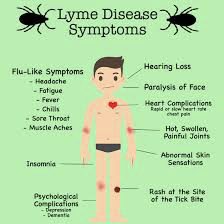
Ticks are common in the Northeast, with high numbers in NYS and throughout the Southern Tier. As a result, tick-borne diseases have been on the rise in recent years, posing a significant health threat to people and pets. While Lyme disease is most common, with 33,000 cases reported in the Middle Atlantic Region in 2022, Anaplasmosis, Ehrlichiosis (spotted fever), and Babesiosis all pose threats. That’s why it's important to be well-informed.
-NYS Assemblywoman Donna Lupardo
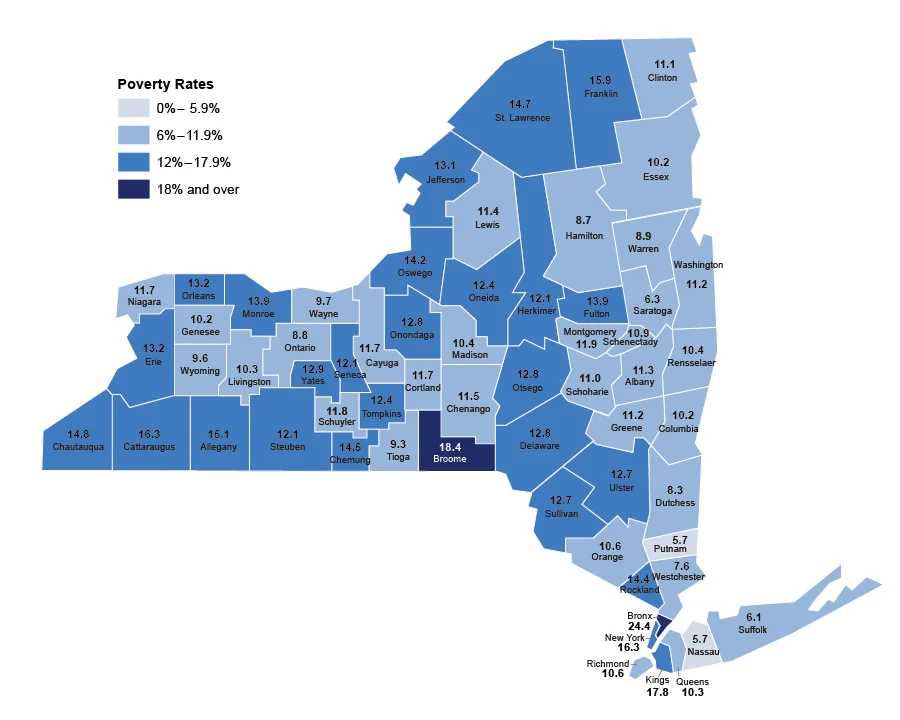
NYS Poverty Rates by County,2020
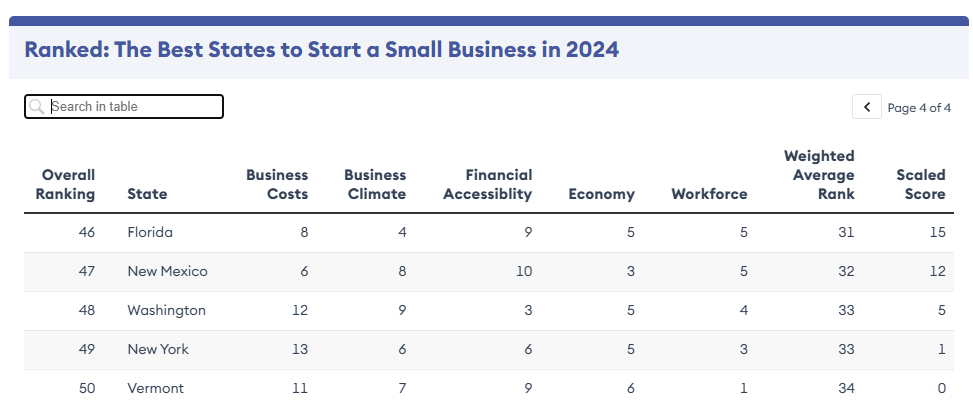
State By State: NYS Ranks 49th
The comprehensive table provides a detailed state-by-state overview, essential for entrepreneurs considering where to launch their businesses. This ranking encapsulates a variety of factors, including population demographics, tax considerations, the rate of small business growth and the availability of funding.
The data set digs into specifics such as income tax, corporate tax, property tax, formation fees and average funding per small business, alongside broader economic indicators such as GDP per capita and the cost of living index. Each state’s ranking is informed by a nuanced consideration of these elements, reflecting its unique business environment and potential for entrepreneurial success.
Programs Are Held To Update & Inform
Elected Officials & Town Employees
Topics presented to date:
- Classifying EMS as an essential Service
- Accessible, Reliable, and Affordable Technology
- Tick-Borne Diseases—Prevention and Education
- Emerald Ash Borer – Cost of Removing Dead Ash Trees in Municipal right of Ways
- The Increasing Number of Homeless People
- Can Land Owned by New York State Be Sold and Put Back on the Tax Rolls?
- Upstate New York Farming Concerns
- Public/Private Partnerships-Building Fiber Networks
- Tick borne diseases in NY- What you need to know
- Keys to Animal Adventure Park's Success
- How to Become a Clean Energy Community
- Local Update of Census Addresses
- Business Climate in New York State
- What are Municipalities' Responsibilities for Cemeteries?
- Economic Development in Tioga County-Lessons Learned
- Govenor Cuomo's New NYS Broadband Program
- PILOTS- Local Government Authority vs IDA Authority
- Wind Power Development
- Challenges of Transportation for Rural Residents
- What Municipalities Need to Know About Solar Farms
- How IF Becomes WHEN with Economic Development
- Update on Affordable Care Act; Implications for Municipalities
- Future of Broadband for Rural areas in Upstate NY
- State Constitutional Convention Delegate Eligibility
- NY State's Property Tax Cap, Property Tax Freeze and Government Efficiency Plans
- Upstate on Broadband Expansion
- New Amsterdam, A Brief History of Dividing NY State
- Streamlining a Solar Permitting Process for Municipalities
- Using Technology for Shared Municipal Services
- 2015 Tax Cap and Planning for Future Years
- Tax Freeze and Circuit Breaker: How Albany Continues to Tie the Hands of Local Governments
- Local Government Efficiency Program
- Innovative Readiness Training
- Public Safety Technology Challenges in Upstate NY
- Broadband in Upstate New York- What are the opportunities for expansion and funding
- Let New York Work: A five point plan to help our Municipalities control costs
- OSHA's New Hazardous Communications/Global Harmonized Standard
- OSC's Fiscal Stress Monitoring System
- Property Tax Cap- Year three update
- Health Care Reform Overview
- How to Promote Upstate Communities
- Dealing with Challenging Behaviors